

The new LTE transmission technology is intended to bring broadband even to the most remote locations and improve transfer rates in areas that already have coverage. But a comparison with current DSL technology shows that the new wireless technology is still in its infancy.
“Lederhose and laptop” was a campaign slogan used by Edmund Stoiber and the CSU around the turn of the millennium. At the time, people had not yet fully realised that every computer would one day need a powerful internet connection. In recent years, however, fast internet in rural regions has become a major issue for politicians and residents, especially where conventional DSL was unavailable or too slow.
Initially, however, only at a very low transmission speed of 1 Mbit/s (megabit per second). In several stages, connections with transfer rates of at least 50 Mbit/s were to become available to 75 percent of households by 2014, with the aim of making such high-performance broadband connections available nationwide as quickly as possible.
Regional Network Specialist Versus the Major Telecommunications Providers
While the large telephone and internet providers such as Telekom, Vodafone and O2 were looking to LTE (Long Term Evolution) wireless technology for expansion, regional computer and network specialist amplus AG from Teisnach ventured into upgrading the existing telephone network in the Upper Palatinate and Lower Bavaria using modern DSL technology.
amplus implemented the project very quickly and, since mid-2010, has supplied DSL connections to the towns of Cham and Roding, among others, including their surrounding areas. “We reach every household in the towns and municipalities where we have installed our technology, including outlying areas and places that previously could not obtain a DSL connection,” the company explained.
Telecommunications companies Telekom, Vodafone and O2, by contrast, relied on the latest LTE wireless technology to close the white spots in broadband coverage. To do so, all three companies acquired frequencies in mid-2010 that had become available following the switch-off of analogue terrestrial television. The frequencies were intended primarily to bring broadband quickly to underserved rural areas.
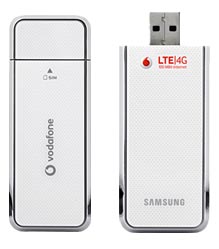
Reason enough to test the services from Vodafone and amplus and see whether they deliver what they promise. Vodafone supplied a Samsung USB stick for the test, while amplus put me in touch with two existing customers in the Roding area code. One customer was located in Roding town centre and the other in a rural outlying area.
How Easy Is Installation?
The two services differ considerably even at the installation stage. Vodafone’s USB stick is simply connected to a computer and the relevant software installed. With amplus, by contrast, the telephone line – which in most cases still runs through Telekom – is migrated to amplus. Both approaches therefore target rather different usage scenarios.
Are the Promised Download Speeds Delivered?
The speed test revealed major differences between the amplus and Vodafone services. As mentioned above, both Vodafone LTE and amplus DSL were tested once in the town centre and once in an outlying area. The website www.speed.io was used to measure maximum upload and download speeds.
The amplus connection in Roding town centre delivered an excellent 80,000 kbit/s download and 18,000 kbit/s upload. Ping times of around 22 ms were also excellent. Ping indicates how long it takes for a signal from the internet to reach the home connection. The Vodafone LTE results were considerably more disappointing.
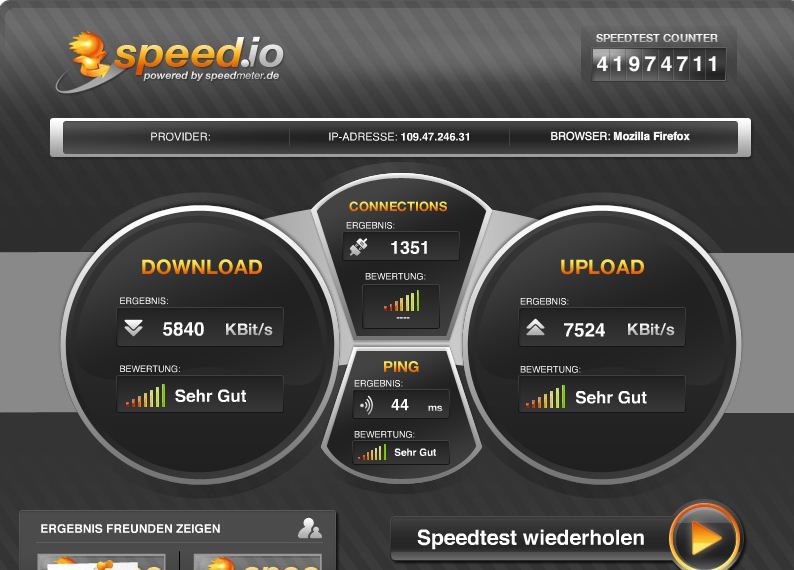
Even more confusing were the measurements with the LTE stick in a field outside Roding near Nanzing. Surprisingly, Vodafone’s software showed signal strength just as high as in Roding itself, even though LTE reception was supposedly not yet available in Nanzing. The download rate there, however, was only a fraction of the speed measured in town.
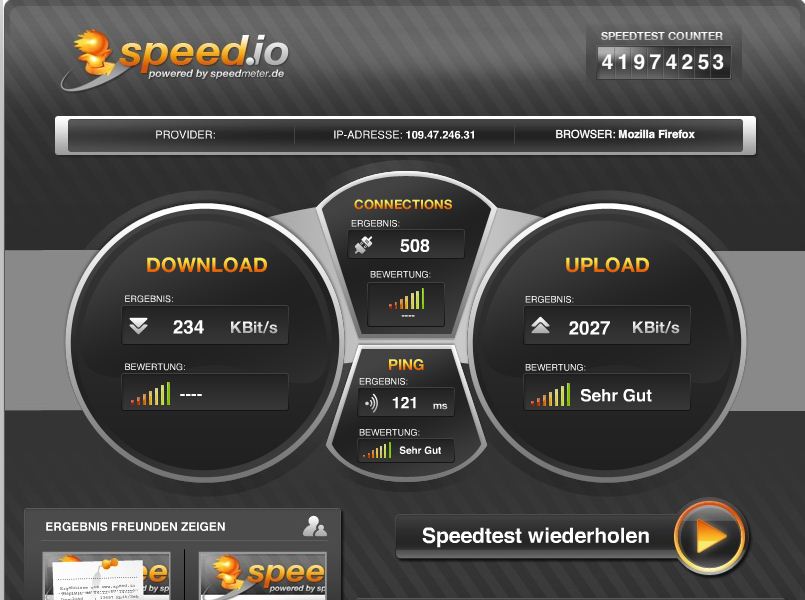
To test amplus DSL in an outlying area, an amplus telephone connection in Haid am Bühl was used. The settlement is about 700 metres as the crow flies from the point where the weak LTE signal of around 230 kbit/s could be measured. LTE itself was not yet available in Haid am Bühl. It is one of the typical white spots that broadband expansion is intended to eliminate.
Who Delivers More for the Money?
The price and performance of the Vodafone and amplus services are not easy to compare because the offers differ substantially. The tested amplus connection in Haid am Bühl, for example, costs around €40 per month. This includes a telephone number, all calls to German landlines and a genuine internet flat rate.
The major difference is the data-volume limit. Vodafone’s offer includes only 5 GB of data; additional volume costs extra or the connection is throttled. Five gigabytes may be enough for an occasional user, but anyone who regularly watches videos on YouTube will quickly exceed it. Modern online services also require increasingly large amounts of data.
Anyone in Roding who can obtain one of amplus’s fast 100 Mbit/s DSL connections at their location pays around €90 per month. Again, this includes a telephone number, all calls to German landlines and a genuine internet flat rate.
Vodafone’s largest LTE package costs around €70 per month and is advertised with up to 50 Mbit/s download and up to 10 Mbit/s upload. The speed test, however, raises considerable doubts about whether those download rates can actually be achieved. A telephone number and landline calls are also included. The internet service, however, remains subject to a data-volume limit.
Conclusion
Without regional provider amplus, there would still be considerably more gaps in broadband coverage in the Upper Palatinate and Lower Bavaria today. The promise by major mobile operators Telekom, Vodafone and O2 to close these gaps quickly using LTE is still far from fulfilled. The new technology still appears to be in its infancy, while modern DSL expansion can already deliver high and stable bandwidths in rural areas.







Was mich am meisten an fast allen Angeboten stört ist das limitierte Volumen. Was bringt es mir, dass die Verbindungen immer schneller werden wenn das nur dazu führt, dass ich meine Grenze früher erreiche.
in der tat, das große problem bei lte sind die geringen inkludierten datenvolumina. bei vodafone hat man wenigstens noch die auswahl zwischen verschiedenen tarifen mit bis zu 30gb monatlich. bei der telekom schaut es sogar noch schlechter aus, hier gibt es aktuell nur einen tarif. allerdings glaube ich wird sich das ändern wenn die telekom lte in den ballungszentren startet. letztendlich müssen die telekommunikationsriesen so handeln, sonst würden sie sich ihr eigenes dsl-geschäft kaputt machen!