
Without a drunk Apple employee leaving the prototype of the next iPhone in a bar, more and more details about the upcoming iPhone 5 have emerged in recent weeks. By now, you can even find a video on YouTube (see below) of what appears to be a working prototype, without it generating much media attention. According to YouTube, the clip has been online for a good ten days (since 1 September) and, with just over one million views at present, seems a little underrated for a “leak” like this, in my opinion.
With the iPhone prototype mentioned above that disappeared in a bar, the finder even sold it to an online magazine, there was a house search, and ultimately Apple demanded that the magazine return the device. The story went around the world. This time, chrisbrownie91 receives an iPhone 5 prototype from, quote, an “anonymous source”, posts videos and photos online, and nobody seems to care. (Incidentally, I also think the photos on Flickr, with just over 50,000 views, have attracted surprisingly little attention for an event like this.) But why is that?
Presumably, interest in Apple’s current state secret has long since declined compared with what we are led to believe. There is still considerable hype surrounding the very likely presentation of the next iPhone this coming Wednesday, but we passed the peak of that hype a long time ago. Apple’s next pocket-sized status symbol has long since entered the mainstream and now competes for media attention with smartphones from many other manufacturers offering products that are at least as good and equally innovative.
This also makes it clear that at least the leaks surrounding the upcoming iPhone 5 – and probably many of its predecessors – were certainly well seeded and staged by Apple’s PR department. When Nokia presented the Lumia 920 with LTE technology last week, which also works outside the USA, the renowned Wall Street Journal was quick to report that it had learned from “people familiar with the matter”: “The iPhone 5 will be compatible with the fastest networks available. Apple’s device is expected to support so-called LTE networks in the USA, Europe and Asia.”
The fact that photos of the new, smaller connector on the upcoming iPhone appeared several weeks ago – a change that will mean buying a new range of accessories for many Apple devotees – even suggests that Apple’s communications strategists cleverly wanted to spare part of the fan base a heart attack during the product presentation on Wednesday, 12 September 2012. People were even talking about the nano-SIM for the upcoming iPhone before the 4S had been presented to the public – although back then they were calling it the iPhone 6 … 😉



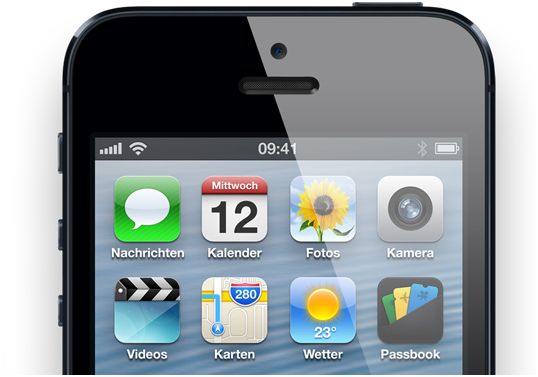




Moin, das Interesse könnte deswegen so gering sein, weil das ein Fake ist. Die Software zeigt ab Minute 3:00 eine alte iOS Version. Warum sollte die auf dem neuen iPhone 5 sein??
wir werden es heute abend sehen… woran erkennst du, dass es sich hier eine veraltete iOS Version handelt?