
For six months now, Germany has had one monopoly less: the rail monopoly. Until the end of 2012, the Passenger Transport Act prevented long-distance bus routes from competing with long-distance rail services. I am currently travelling from Munich to Dresden with Flixbus. Here are my impressions and experiences:
Comparing the Services
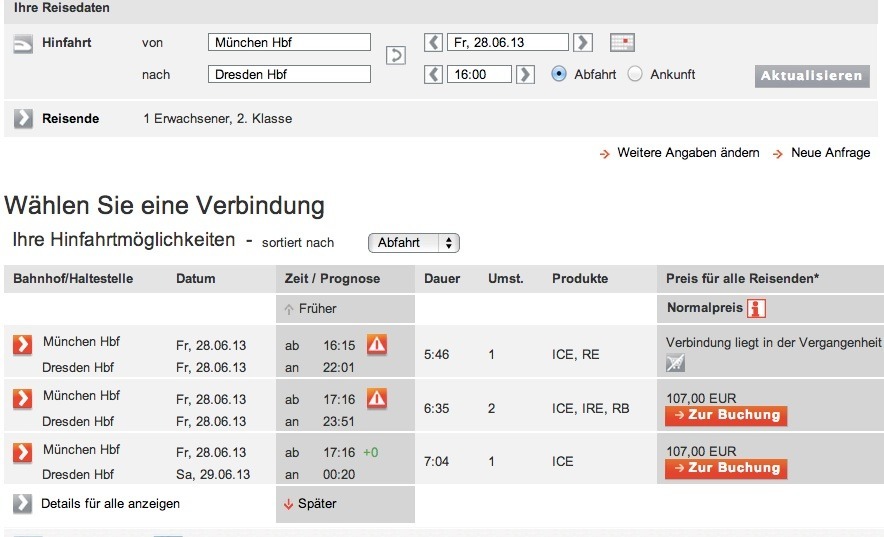
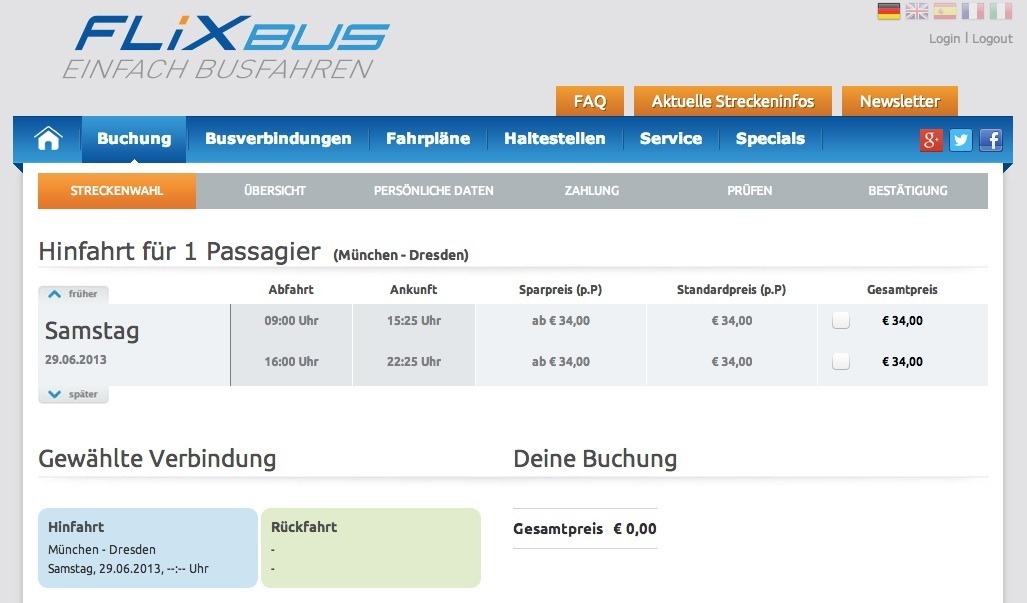
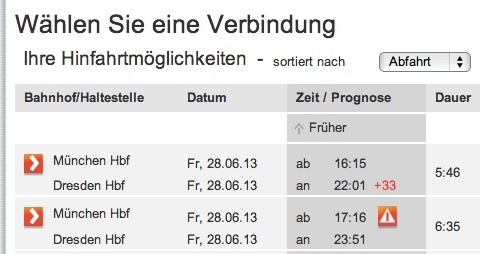
The bus from Munich to Dresden runs only twice a day – once at 9 a.m. and again at 4 p.m. Deutsche Bahn offers considerably more choice: between 9 a.m. and 4 p.m. alone, it offers eight connections to Dresden. According to the timetables, the train is also faster, taking 5 hours 46 minutes compared with 6 hours 25 minutes by bus. You can find out which one is ultimately more punctual in the conclusion. One advantage of the bus is that it goes to Dresden without a change, whereas travelling by train requires at least one change.
Price & Booking
The clear advantage of the bus is the price. While Deutsche Bahn charges €107 for Munich to Dresden, the Flixbus journey costs only €34 – €73, or almost 68 percent, less. Booking and payment are handled well by Flixbus: in addition to debit and credit cards, you can also pay cash when boarding, making it roughly comparable to the train. Flixbus also offers PayPal, which I think is cool.
… and We’re Off
The journey starts at Munich’s central bus station. Unfortunately, finding the Flixbus to Dresden is not quite as straightforward as finding a train. The ticket does not say which bay the bus departs from. Deutsche Bahn is naturally more precise in communicating the platform for a train. When boarding, one of the drivers checks the ticket I printed myself. Although the printed 2D barcode makes the ticket look professional, it apparently plays no role in the check – the driver simply gives the printout a critical look, presumably to spot a possible forgery.
The bus itself makes a good impression, certainly better than some Deutsche Bahn regional trains. Clean new seats with wood-look trim and leather around the headrests. Unfortunately, the excellent first impression takes a hit when I fold down the small table at my seat and find a large, fresh coffee stain.
The journey begins five minutes after 4 p.m. with a welcome from one of the two drivers. In German with a noticeable accent, passengers are told that drinks are available for purchase, Wi-Fi is free and seat belts must be worn. Some seats are also equipped with 220-volt power sockets. As long as you do not compare the bus with a Deutsche Bahn ICE, the Flixbus equipment makes a better overall impression than the train.


Working on the Bus
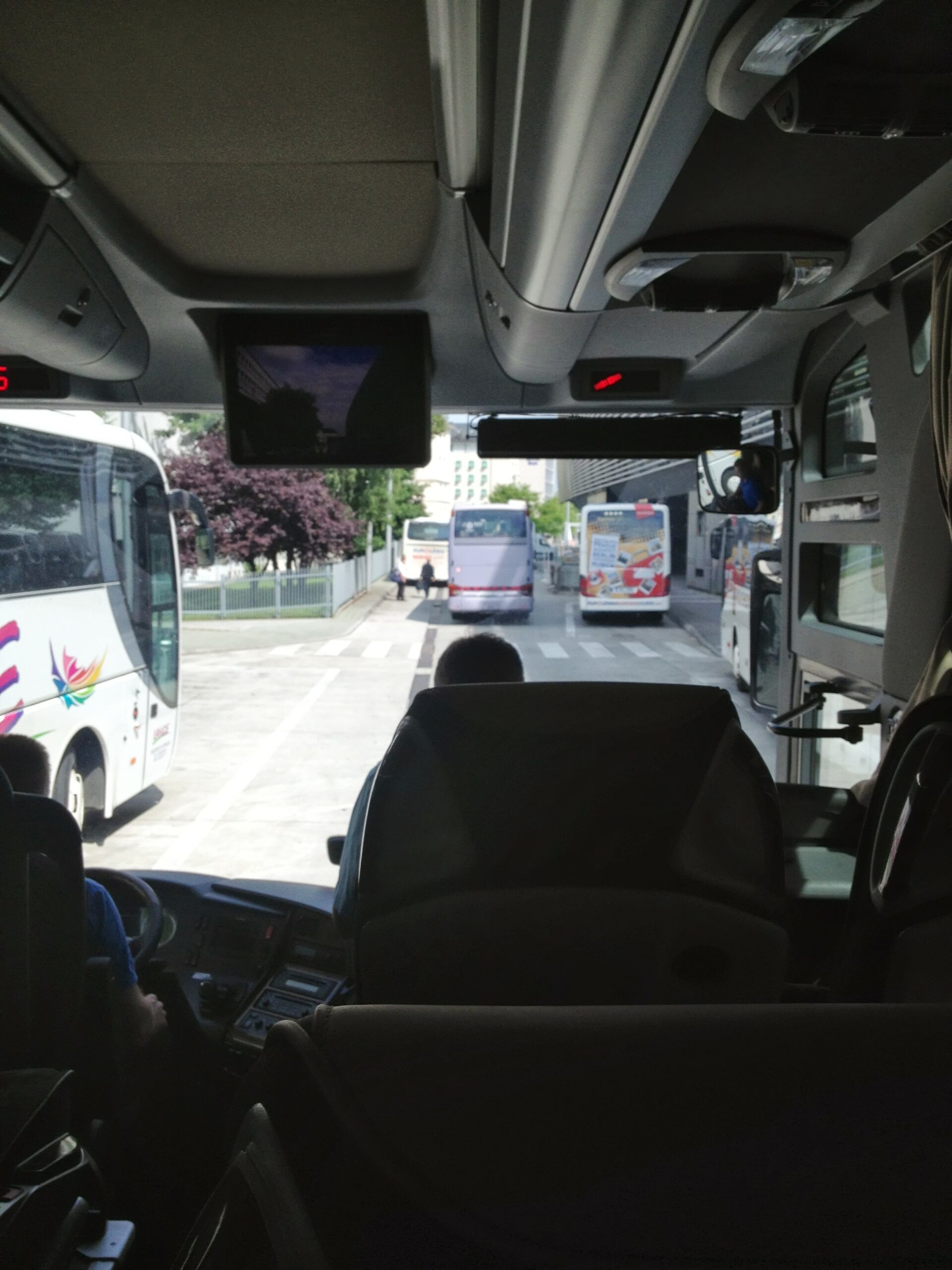
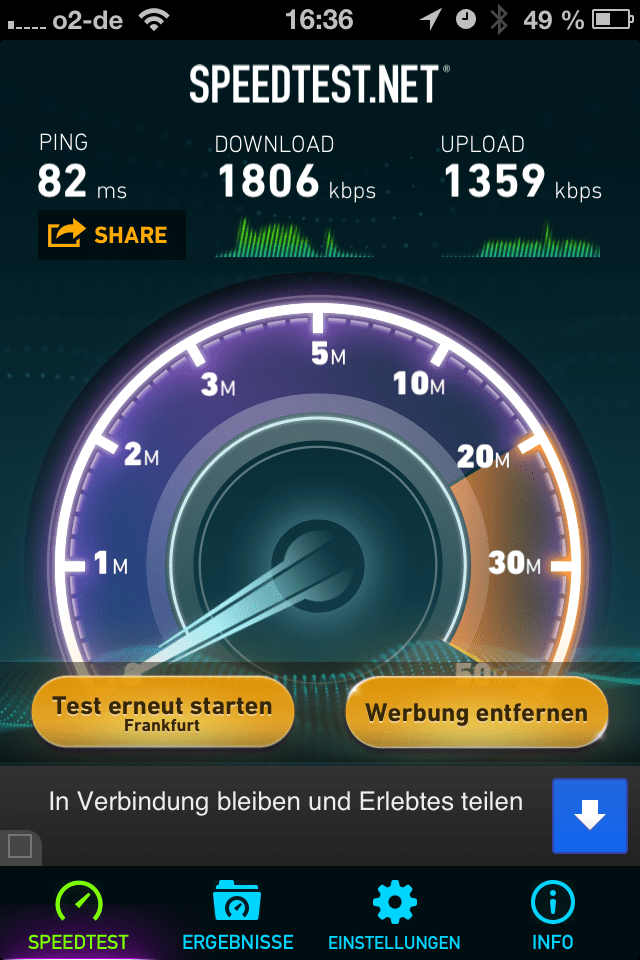
Many commuters use their time on the train to work. Does that work just as well on a bus? With Wi-Fi and power sockets, Flixbus provides fairly good conditions. In practice, however, a train journey is much better suited to working. A major drawback is that a bus sways much more than a train, which can make you feel sick depending on how sensitive you are. Stop-and-go traffic when leaving and entering cities is another disadvantage. When the driver brakes at a traffic light, my smartphone even slips out of my hand and crashes onto the floor. Trains also provide more room for working, especially an ICE. On the other hand, your bus ticket guarantees you a seat.
Conclusion
If you want to travel cheaply, the new long-distance bus services are hard to beat. For little money you get a guaranteed seat and free Wi-Fi. You should, however, allow for delays on busy routes at peak times. On my journey we were already 40 minutes late at the first stop in Nuremberg, mainly because of Friday-afternoon traffic leaving Munich. In the end, though, we arrived in Dresden only 22 minutes late. Incidentally, the comparable train arrived 33 minutes late. If you want to work on a long-distance journey, however, you will probably prefer a table seat on an ICE.
Positive
- Usually considerably cheaper than the train
- PayPal payment also available
- 220-volt power sockets available
- Free Wi-Fi
- Guaranteed seat
- More comfortable than regional trains
- Usually no need to change
Negative
- Fewer daily connections
- Usually slower than the train
- Delays must be expected at peak times
- Less suitable for working