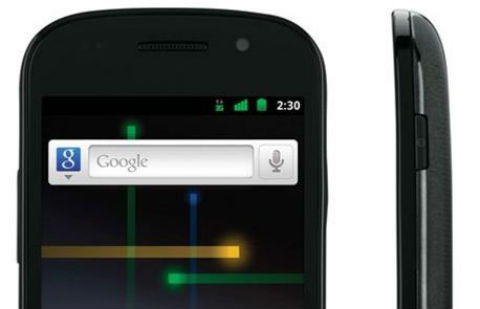
It looks as though the Nexus S announced today could soon become a good alternative to Apple’s iPhone 4. Engadget.com reports very enthusiastically after an initial test with a demo unit. Spiegel Online says it is not an iPhone killer, but sees the new Google phone as a technology showcase and driver. I see it somewhat differently: the real iPhone killer is Android itself, which now runs on more mobile phones than Apple’s iOS, although it still trails the iPad in the new tablet market.
With the Nexus S, Google has finally managed to bring Android 2.3 up to the level of the iPhone and iOS. Google achieves this with a thoroughly revised interface that is said to look much more polished. Important functions such as cutting and pasting text have also been improved. Published photos confirm these reports. Build quality and design are also said to make a good impression – although that is naturally always a matter of taste.
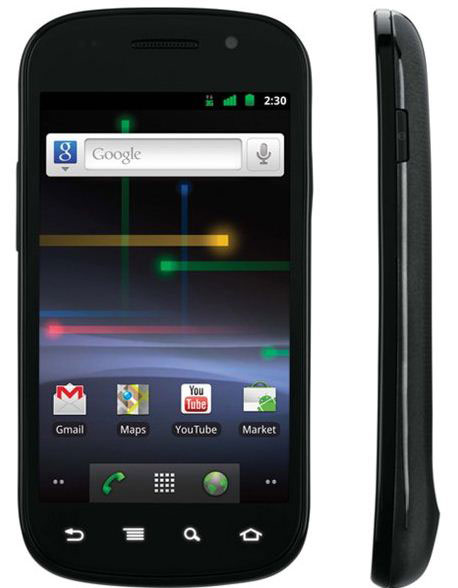
I also believe that Android smartphones have so far not been a true alternative to current iPhones. I have had several opportunities to try current models such as the Nexus S predecessor, the Nexus One. Again and again, my experience confirmed what I had read in reviews: an iPhone simply felt more polished to use. It may sound trivial, but even the lack of a rotation animation on a Google phone immediately stood out to me.
The fact that Android apps have so far sometimes received less attention than iPhone applications may be related. For a long time, probably the most important smartphone app at the time, Facebook, was miles better on the iPhone. The Nexus S therefore gives hope that the Android app market will gain importance and that applications will catch up with iPhone/iOS apps in quality and selection. Android 2.3’s successor, Honeycomb, which is intended to be better suited to tablets, is another reason for optimism. Android could then become a technology driver for the iPad as well, as the following prototype demonstration at “D:Dive into mobile” impressively shows.
I am also curious whether the Near Field Communication (NFC) built into the Nexus S will help the technology achieve a breakthrough. Deutsche Bahn has been running a large-scale NFC trial in Germany since 2006 that could revolutionise payment for public-transport tickets. The Touch & Travel pilot project has meanwhile entered its second phase. In Berlin, for example, I have already noticed the touchpoints at stops several times. Until now, only around a dozen mobile-phone models supported NFC, and those models played only a marginal role in the mass market compared with bestsellers such as the iPhone. So the Nexus S really could act as a technology driver here – especially since rumours suggest the next iPhone will support NFC as well.